
Sustainable & Ethical Leather Sourcing: A Guide for Your Brand
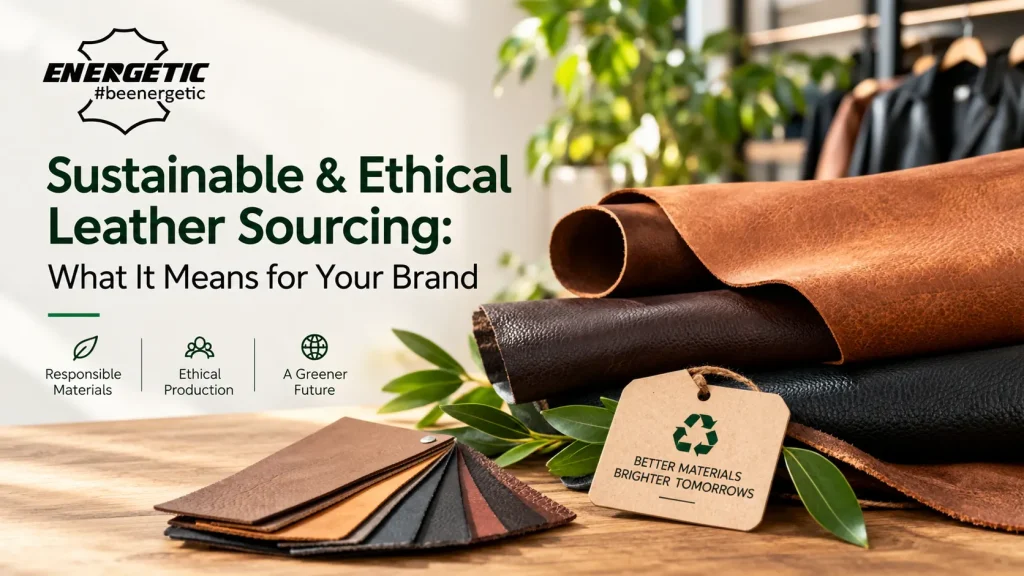
For fashion brands, retailers, wholesalers, and private-label businesses, responsible sourcing is becoming an increasingly important part of product development. Customers want products that look good and perform well, but they also want greater transparency about how those products are made.
Sustainable & Ethical Leather Sourcing is therefore more than selecting a particular type of leather. It involves considering the origin of materials, production practices, working conditions, environmental impact, and the manufacturing partners behind the finished product.
What Does Ethical Leather Sourcing Mean?
Ethical sourcing means working with suppliers that follow responsible business and labor practices throughout the manufacturing process. For leather products, this can include safe working environments, fair treatment of workers, responsible waste management, and appropriate quality controls.
For a brand, choosing the right manufacturing partner is particularly important because ethical practices should extend beyond the brand’s own operations. Your customers may associate the finished product with your brand, regardless of where it was manufactured.
A responsible supplier should therefore be able to explain its manufacturing process, customization capabilities, quality procedures, and approach to workplace standards.
Why Sustainability Matters in Leather Products
Leather is a durable material that can be used for products designed to last for years. However, responsible production requires attention to how materials are selected, processed, and incorporated into finished goods.
Brands can consider several factors when evaluating a supplier:
- Material selection and available leather options
- Responsible use of materials and components
- Waste reduction during production
- Product durability and expected lifespan
- Packaging choices
- Workplace conditions
- Quality control throughout manufacturing
These considerations can help brands make more informed sourcing decisions while developing products that meet their commercial and quality expectations.
What Should Brands Ask a Leather Manufacturer?
Before placing an order, buyers should look beyond price and product photographs. A detailed conversation with the manufacturer can reveal whether the supplier is suitable for a long-term business relationship.
Useful questions include:
Where are the materials sourced?
Ask what types of leather are available and whether the manufacturer can provide information about its material suppliers and sourcing practices.
How is quality controlled?
Ask whether inspections are performed during production and before shipment. Consistent quality is particularly important for private-label collections where products must match approved specifications.
What happens to production waste?
Leather cutting generates offcuts and other production waste. Understanding how a factory manages these materials can provide useful insight into its approach to resource efficiency.
Are working conditions taken seriously?
Responsible manufacturing includes maintaining a safe and appropriate workplace for production staff.
Can the manufacturer support responsible product development?
A capable partner should be able to work from designs, specifications, or tech packs and help buyers select suitable materials, components, and construction details.
How Energetic Wears Supports Responsible Manufacturing
Energetic Wears works with fashion brands, retailers, wholesalers, startups, and private-label buyers seeking customized leather products from Pakistan.
Our manufacturing capabilities cover leather jackets, garments, bags, gloves, belts, wallets, accessories, and other leather products. Buyers can customize materials, colors, stitching, hardware, zippers, linings, labels, packaging, and other product details according to their requirements.
Quality control is integrated into the manufacturing process, including incoming material checks, in-process inspection, final inspection, and packing and shipment checks. Where available and appropriate, we can work with LWG-certified leather suppliers as part of our material sourcing approach.
Our production model is also designed to support different stages of a brand’s development. From sample development and product refinement to private-label and bulk production, buyers can work with a manufacturing partner that understands the practical requirements of customized leather products.
Building a More Responsible Supply Chain
Choosing a supplier is ultimately about more than finding a factory that can produce a product. Brands need manufacturing partners that understand their specifications, quality expectations, timelines, and long-term business objectives.
For emerging brands, this can be especially important. A flexible manufacturer can help turn an initial product concept into a commercially viable collection while maintaining attention to material selection, craftsmanship, quality, and responsible production practices.
For established businesses, consistent manufacturing processes and transparent communication can help strengthen supply-chain relationships and support future product development.
Sustainable & ethical sourcing is not a single decision made at the beginning of a project. It is an ongoing process involving materials, people, production, quality, and the relationship between a brand and its manufacturing partners.
If your brand is developing a new leather collection or looking for a private-label manufacturing partner, Energetic Wears can support the journey from product concept and sample development to customized production and export.