
What Makes a Quality Motorcycle Leather Jacket? Key Features Explained
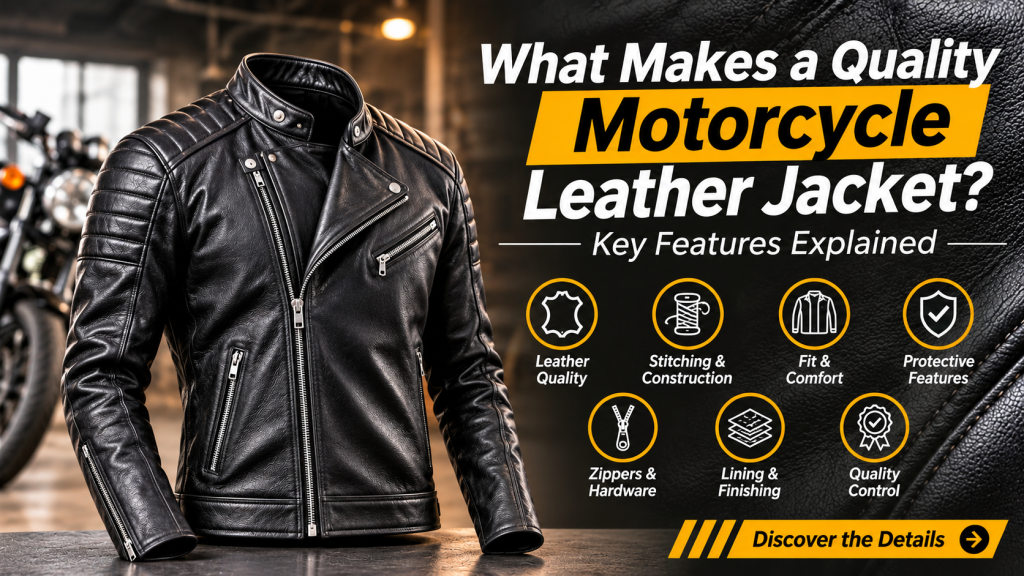
A quality motorcycle leather jacket is more than a fashion statement. Its overall quality depends on the leather, construction, stitching, fit, hardware, lining, and finishing details. Whether designed for everyday fashion or motorcycle riding, each element contributes to the jacket’s appearance, comfort, durability, and functionality.
For fashion brands, retailers, wholesalers, and private-label businesses, understanding these features is essential when selecting products and evaluating manufacturing partners.
In this guide, we explore the key characteristics of a quality motorcycle leather jacket and explain what buyers should consider before making a purchasing or sourcing decision.
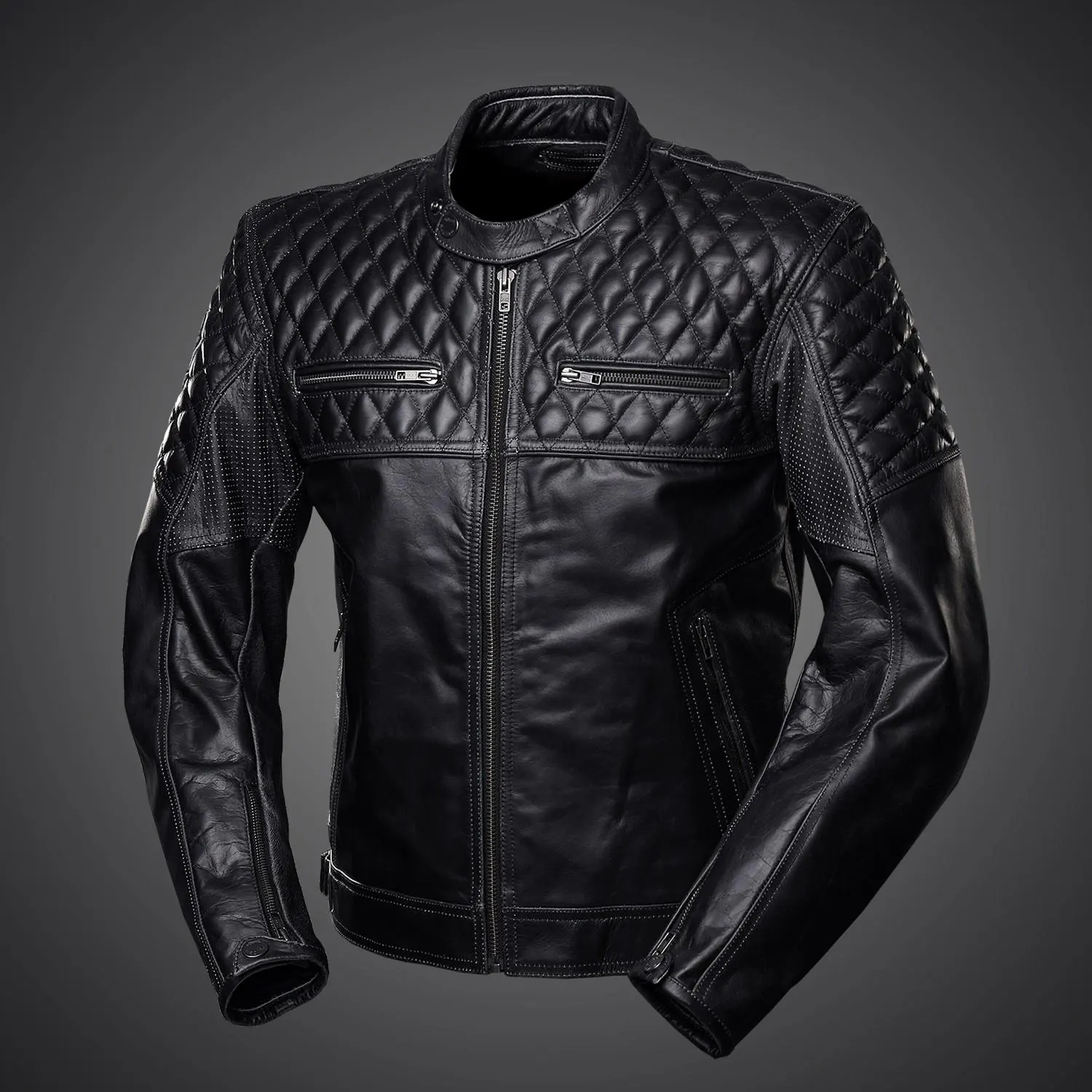
1. Leather Quality and Material Selection
Leather is one of the most important factors determining a jacket’s appearance, feel, and performance. Different leather types offer different characteristics, making material selection an important part of product development.
Common options include:
- Lambskin: Known for its soft texture, lightweight feel, and smooth appearance. It is popular for premium fashion jackets but generally requires more care than heavier leather options.
- Cowhide: Typically thicker and more robust than lambskin, making it a common choice for motorcycle-inspired jackets and certain protective riding garments.
- Goatskin: Offers a balance of flexibility, durability, and a distinctive grain texture.
- Sheepskin: Often selected for its softness and comfort, with suitability depending on the hide, thickness, and garment design.
- Suede and nubuck: Provide distinctive surface textures and a different visual character, although their care requirements and resistance to staining vary.
When evaluating leather, buyers should consider consistency of color, surface quality, thickness, flexibility, and suitability for the intended design.
Buyer tip: The best leather is not necessarily the thickest or most expensive. The appropriate choice depends on the jacket’s intended use, design, target market, and performance requirements.
2. Strong Stitching and Construction
Even high-quality leather cannot compensate for poor construction. Stitching and seam workmanship play an important role in the jacket’s structural integrity and overall appearance.
Look for consistent stitch spacing, secure seams, clean thread finishing, and properly assembled panels. Areas subject to additional stress may require suitable seam construction or reinforcement, depending on the jacket’s design and intended use.
For manufacturers, accurate pattern development and careful assembly help maintain consistency across different sizes and production batches.
Loose threads, irregular stitching, poorly aligned panels, and uneven seams can indicate inadequate workmanship or quality control.
For brands purchasing in bulk, reviewing construction details during sample approval can help establish clear production standards before manufacturing begins.
3. Fit, Comfort, and Mobility
A well-designed quality motorcycle leather jacket should offer an appropriate fit without unnecessary restriction. However, the ideal fit depends on whether the garment is intended primarily for fashion or protective motorcycle riding.
Important considerations include:
- Accurate chest, shoulder, waist, and sleeve measurements.
- Appropriate sleeve length and armhole construction.
- Comfortable movement through the shoulders and elbows.
- A collar and cuffs that fit the intended design.
- Suitable room for layering, where required.
- Consistent sizing across the available size range.
Pattern development is particularly important because leather behaves differently from many woven fabrics. Its thickness, flexibility, and stretch characteristics can influence the final fit.
For custom leather jackets, brands can specify measurements, preferred silhouettes, grading requirements, and design details to achieve a fit that suits their target customers.
4. Protective Features for Motorcycle Riding
Not every motorcycle-style leather jacket is designed or tested to provide protection during a ride.
Fashion jackets may feature traditional motorcycle styling, such as asymmetrical zippers, snap collars, and fitted silhouettes. Protective riding jackets require additional consideration of abrasion resistance, seam strength, impact protection, and garment construction.
Depending on the design, protective features may include:
- Impact protectors at the shoulders and elbows.
- Suitable back protection or a compatible back-protector pocket.
- Reinforced seams in critical areas.
- Abrasion-resistant materials and appropriate construction.
- Secure closures that help the garment remain properly positioned.
Buyers seeking protective riding equipment should check applicable standards and the specific garment’s test results or certification. In Europe, for example, motorcycle protective garments may fall under the EN 17092 series of standards.
Important: Genuine leather alone does not establish that a jacket provides certified motorcycle protection. Suitability depends on the complete garment and the relevant testing requirements.
5. Reliable Zippers, Hardware, and Fastenings
Zippers, snaps, buckles, and other hardware influence both functionality and appearance. They can also affect the product’s perceived quality.
When evaluating these components, consider:
- Smooth zipper operation.
- Secure zipper attachment and stitching.
- Durable snaps, buckles, and fasteners.
- Appropriate corrosion resistance for the intended use.
- Consistent finishes and color matching.
- Hardware placement that supports the design and intended function.
Metallic finishes such as silver, antique brass, and matte black can contribute to the jacket’s visual identity. For private-label products, hardware can be selected to complement the brand’s aesthetic.
Testing closures during sample development helps identify potential issues before bulk production.
6. Lining and Interior Finishing
The interior of a leather jacket deserves as much attention as its exterior. A suitable lining can improve comfort, support the garment’s structure, and contribute to its intended seasonal use.
Depending on the design, lining options may include polyester, viscose, rayon, cotton blends, or quilted materials.
Buyers should assess the lining’s texture, weight, durability, seam finishing, and compatibility with the jacket’s intended purpose.
Additional considerations include neatly finished interior seams, securely attached lining panels, functional inside pockets, and smooth transitions around zippers and cuffs.
For cooler-weather designs, quilted linings or compatible insulation may be appropriate. Lighter linings can suit fashion jackets intended for milder conditions.
The correct specification depends on the target market, climate, design, and price positioning.
7. Design Details and Functional Features
Motorcycle leather jackets are available in a variety of styles, from classic biker silhouettes to contemporary fashion designs.
Popular details include asymmetrical front zippers, stand-up collars, snap closures, adjustable waist belts, shoulder panels, decorative stitching, and multiple pockets.
However, attractive styling should be supported by practical construction.
Pocket placement should suit the intended use. Decorative elements should be securely attached. Zipper positions and panel proportions should complement the overall silhouette.
For brands developing their own collections, customization can extend to leather type, color, stitching, lining, hardware, labels, and packaging.
A well-developed design balances visual appeal, functionality, manufacturing feasibility, and the expectations of the target customer.
8. Quality Control and Finishing
Consistent quality requires more than inspecting the finished jacket. It involves checking materials, construction, measurements, and finishing throughout the manufacturing process.
Important quality-control checkpoints include:
- Material inspection: Checking leather appearance, color consistency, and suitability against the approved specifications.
- In-process inspection: Reviewing stitching, panel alignment, assembly, and workmanship during production.
- Measurement verification: Confirming that garment dimensions meet the approved size specifications and tolerances.
- Hardware and closure checks: Ensuring that zippers, snaps, and other components function correctly.
- Final inspection: Examining the finished jacket for visible defects, construction issues, and specification compliance.
- Packing inspection: Verifying labels, packaging, quantities, and other agreed requirements.
For B2B buyers, an approved sample and a clearly documented specification provide useful reference points for bulk production.
Consistent quality-control procedures help manufacturers identify problems earlier and reduce the risk of receiving products that differ from the agreed requirements.
9. How to Choose the Right Motorcycle Leather Jacket Manufacturer
For fashion brands, retailers, importers, and private-label businesses, selecting a manufacturing partner is as important as choosing the jacket design.
Before placing an order, consider the following questions:
- Can the manufacturer develop products from your designs, reference images, or technical specifications?
- Can it work with the required leather types, colors, hardware, lining, and branding elements?
- Does it have a defined sample approval and quality-control process?
- Can it maintain consistent measurements and workmanship across production batches?
- Are sample lead times, production schedules, minimum order quantities, and shipping terms clearly communicated?
- Can the manufacturer support your intended product positioning and target market?
Requesting a development sample based on your specifications can help you assess the manufacturer’s workmanship and determine whether the proposed product meets your expectations.
For growing brands, a manufacturing partner that supports product customization and communicates clearly throughout development can help simplify the transition from concept to finished goods.
Conclusion
A quality motorcycle leather jacket combines suitable leather, careful construction, consistent stitching, an appropriate fit, reliable hardware, well-finished lining, and effective quality control. For protective riding garments, verified performance and compliance with applicable safety standards are additional considerations.
For businesses developing their own leather jacket collections, the right manufacturing partner can help translate design concepts into finished products that meet defined specifications and brand requirements.
At Energetic Wears, we specialize in custom leather product manufacturing for brands, retailers, wholesalers, importers, and private-label businesses. From motorcycle-inspired leather jackets to other leather garments and accessories, we work with customer requirements to develop products around specified designs, materials, and branding preferences.
Have a leather jacket design or a new collection in mind? Contact Energetic Wears to discuss your product requirements and explore custom manufacturing opportunities.