
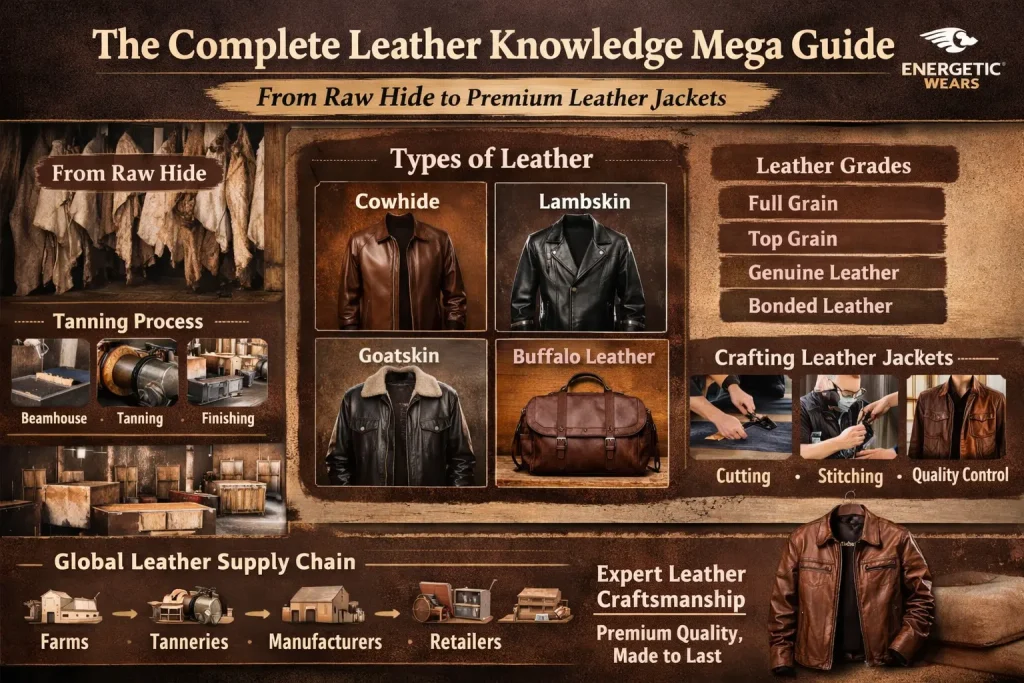
Leather is one of the most durable, versatile, and luxurious materials used in the fashion and manufacturing industries. For thousands of years, leather has been used to produce clothing, footwear, furniture, and accessories due to its unique combination of durability, flexibility, and natural beauty.
From Raw Hide to Finished Jackets
Today, leather remains a premium material for industries including fashion, automotive interiors, aviation seating, furniture manufacturing, and luxury accessories. However, the process that transforms a raw animal hide into a finished leather product is complex and involves multiple stages of processing, treatment, and finishing.
This comprehensive guide explains everything brands, retailers, and product developers need to know about leather — from raw hides and skins to tanning, finishing, leather grades, and garment manufacturing.
-
What Is Leather?
Leather is a durable material produced by tanning animal hides or skins. The tanning process stabilizes the protein structure within the skin, preventing decomposition and giving leather its strength, flexibility, and resistance to environmental factors.
The primary structural component of leather is collagen, a fibrous protein that forms a strong interwoven network within the skin.
When properly processed, leather becomes a long lasting material capable of maintaining its integrity for decades.
-
The Difference Between Hide and Skin
In the leather industry, the terms hide and skin refer to the raw material used to produce leather.
| Feature | Hide | Skin |
| Animal size | Large animals | Small animals |
| Thickness | Thick | Thin |
| Durability | Very strong | Soft and flexible |
| Examples | Cow, buffalo | Lamb, goat |
Hides are typically used for heavy duty leather products such as belts, furniture upholstery, and motorcycle jackets, while skins are commonly used in fashion garments due to their softness and flexibility.
-
Types of Animals Used for Leather
Different animals produce leather with unique textures, grain patterns, and durability characteristics.
Cowhide
Cowhide is the most widely used leather worldwide.
Key characteristics:
- Strong fiber structure
- High durability
- Natural grain texture
- Versatile applications
Common uses include:
- Leather jackets
- Shoes
- Bags
- Upholstery
Lambskin
Lambskin is considered one of the most luxurious types of leather used in fashion.
Characteristics include:
- Extremely soft texture
- Lightweight structure
- Smooth grain pattern
Luxury fashion brands frequently use lambskin for premium leather jackets and handbags.
Goatskin
Goatskin leather is known for its durability and natural pebble grain texture.
Advantages include:
- High tensile strength
- Water resistance
- Natural flexibility
Goatskin is commonly used in aviation jackets and durable outerwear.
Buffalo Leather
Buffalo leather is thicker and heavier than cowhide.
Characteristics include:
- Rugged texture
- High durability
- Distinct grain patterns
This leather is often used in heavy duty jackets and bags.
-
Structure of Leather Fiber
The strength and flexibility of leather come from its three dimensional collagen fiber network.
Leather fibers are structured in layers:
| Layer | Description |
| Grain Layer | Strong outer surface |
| Corium | Dense fiber structure |
| Flesh Layer | Inner soft layer |
The grain layer is the most valuable portion of the hide because it provides durability and aesthetic appeal.
-
Leather Manufacturing Process
The journey from raw hide to finished leather involves several complex stages.
Stage 1: Hide Preservation
Raw hides begin decomposing quickly after removal from animals. To prevent decay, hides are preserved using salt or refrigeration.
Stage 2: Beamhouse Operations
This stage prepares hides for tanning.
Processes include:
- Soaking
- Liming
- Fleshing
- Deliming
- Bating
These treatments clean the hide and remove hair and unwanted tissues.
Stage 3: Tanning
Tanning converts raw hide into stable leather.
Common tanning methods include:
Chrome Tanning
- Fast processing
- Produces soft and flexible leather
- Most common method globally
Vegetable Tanning
- Uses plant based tannins
- Produces firm leather
- Develops natural patina over time
Aldehyde Tanning
- Chrome-free process
- Used for eco friendly leather
-
Leather Thickness and Measurement
Leather thickness is measured in millimeters or ounces.
Typical ranges for garments:
| Leather Type | Thickness |
| Fashion jackets | 0.8 – 1.0 mm |
| Standard jackets | 1.0 – 1.2 mm |
| Motorcycle jackets | 1.2 – 1.6 mm |
The right thickness balances comfort, durability, and flexibility.
-
Leather Grades and Quality Levels
Leather quality is determined by how much of the natural grain layer remains intact.
| Grade | Description |
| Full Grain | Highest quality leather |
| Top Grain | Slightly sanded surface |
| Genuine Leather | Lower layers of hide |
| Bonded Leather | Leather fibers bonded together |
Full grain leather is widely considered the most durable and premium type of leather.
-
Leather Finishes
Finishing determines the appearance and performance of leather.
Common finishes include:
Aniline Finish
- Natural appearance
- Transparent dye
Semi Aniline Finish
- Slight protective coating
- Balanced durability
Pigmented Finish
- Heavy protective coating
- High stain resistance
-
Leather Textures and Patterns
Leather textures may be natural or created artificially through embossing.
Examples include:
- Pebble grain
- Crocodile embossing
- Snake embossing
- Saffiano texture
These textures enhance visual appeal and brand differentiation.
-
Sustainability in the Leather Industry
Modern leather production increasingly focuses on sustainability.
Key initiatives include:
- Responsible sourcing of hides
- Eco friendly tanning chemicals
- Reduced water usage
- Waste management
The Leather Working Group (LWG) audits tanneries for environmental compliance.
-
Leather Applications Across Industries
Leather is used in many industries, including:
Fashion
- Jackets
- Shoes
- Bags
- Gloves
Automotive
- Car seats
- Steering wheel covers
Furniture
- Sofas
- Chairs
Aviation
- Aircraft interiors
-
Leather Jacket Manufacturing
Leather jackets require skilled craftsmanship.
Production typically includes:
- Leather selection
- Pattern making
- Leather cutting
- Stitching and assembly
- Quality control
Each stage affects the durability and appearance of the final product.
For brands and retailers, selecting the right manufacturer is essential.
Important factors include:
- Leather quality
- Manufacturing expertise
- Customization capability
- Ethical sourcing
- Consistent production standards
-
Global Leather Market & Supply Chain Explained
The leather industry operates through a complex global supply chain involving multiple participants, from livestock farming to finished leather product manufacturing.
Key Stages in the Global Leather Supply Chain
| Stage | Industry Participant | Role |
| Livestock Industry | Farmers & ranchers | Raise animals that provide raw hides and skins |
| Slaughterhouses | Meat industry processors | Remove hides as by products of meat production |
| Hide Traders | Raw material suppliers | Collect, grade, and distribute hides to tanneries |
| Tanneries | Leather processing companies | Convert raw hides into finished leather |
| Leather Manufacturers | Product manufacturers | Produce jackets, bags, footwear, and accessories |
| Brands & Retailers | Fashion companies | Design, market, and sell leather products |
| Consumers | End customers | Purchase leather products |
Major Leather Producing Regions
The leather industry is globally distributed.
| Region | Key Role in Leather Industry |
| China | Largest leather manufacturing hub |
| Italy | Premium luxury leather processing |
| Pakistan | Major leather garment manufacturing |
| India | Large leather export industry |
| Turkey | Strong leather fashion sector |
| Brazil | Major cattle hide producer |
Pakistan is recognized internationally for leather garment manufacturing, especially leather jackets, due to skilled craftsmanship and competitive production costs.
This makes companies like Energetic Wears well positioned to supply global fashion brands.
-
How to Identify High Quality Leather (Buyer Guide)
For brands and retailers sourcing leather jackets, identifying high quality leather is critical. Not all leather products are created equal.
Below are key indicators used by professionals in the leather industry.
15.1. Grain Pattern
High quality leather maintains the natural grain of the hide.
| Grain Type | Quality Level |
| Full grain | Highest quality |
| Top grain | High quality |
| Corrected grain | Medium quality |
| Bonded leather | Low quality |
Natural grain patterns are irregular, which indicates authenticity.
15.2. Leather Smell
Real leather has a distinctive natural aroma.
Synthetic leather or bonded leather often smells like plastic or chemicals.
15.3. Flexibility Test
When bent, high quality leather shows natural wrinkles called grain break.
Low quality leather often remains stiff or shows unnatural creases.
15.4. Surface Imperfections
Natural leather often contains small marks or scars from the animal’s life.
These imperfections indicate authenticity rather than defects.
15.5. Thickness Consistency
High-quality leather garments maintain consistent thickness throughout the material.
Uneven thickness may indicate poor processing.
15.6. Breathability
Real leather is breathable because of its natural fiber structure. Synthetic alternatives do not provide the same airflow.
-
Leather Jacket Manufacturing (Step by Step Factory Guide)
Leather jacket production requires skilled craftsmanship and precision manufacturing.
Below is a typical factory workflow used by professional leather garment manufacturers.
Step 1. Leather Selection
Manufacturers select leather based on:
- Animal type
- Thickness
- Grain quality
- Color consistency
For fashion jackets, common materials include:
- Lambskin
- Goatskin
- Cowhide
Step 2. Pattern Development
A technical pattern is created to define the shape and dimensions of the jacket.
This includes:
- Front panels
- Back panels
- Sleeves
- Collar
- Pockets
Pattern accuracy determines the final fit of the garment.
Step 3. Leather Cutting
Leather pieces are cut according to the pattern using specialized cutting tools or die cut machines.
Unlike fabric, leather must be carefully inspected before cutting to avoid natural defects.
Step 4. Skiving
Skiving thins the leather edges to reduce bulk at seams.
This ensures smoother stitching and improved comfort.
Step 5. Stitching and Assembly
Skilled workers assemble the jacket using industrial sewing machines designed for leather.
Key assembly stages include:
- Joining panels
- Installing zippers
- Adding pockets
- Attaching sleeves and collars
Step 6. Lining Installation
Most leather jackets include inner lining materials such as:
- Polyester lining
- Satin lining
- Quilted insulation
The lining improves comfort and insulation.
Step 7. Quality Control
Each jacket undergoes inspection for:
- Stitch strength
- Symmetry
- Leather defects
- Hardware quality
Quality control ensures consistency in bulk production.
Step 8. Finishing and Packaging
The final stages include:
- Leather conditioning
- Pressing and shaping
- Tagging and labeling
- Protective packaging
Products are then prepared for shipment to global clients.
Why Buyers Choose Energetic Wears
Energetic Wears specializes in custom handmade leather goods for fashion brands, retailers, and private label businesses worldwide.
Key strengths include:
- Premium leather sourcing
- Skilled craftsmanship
- Custom design capabilities
- Reliable wholesale manufacturing
- Competitive global pricing
With extensive experience in leather garment production, Energetic Wears supports brands in bringing high quality leather products to market.